
Ever feel like you're drowning in marketing apps, spending more time connecting tools than growing your business? In the next few minutes we'll cut through the noise and show you the top automation platforms that small businesses can actually use to save hours and boost sales. Here are the 10 best marketing automation tools for small business, and exactly who each one is for.
Table of Contents
- 1. Bryan Rivera AI (Our Top Pick)
- 2. ActiveCampaign — Best for Advanced Automation & CRM
- 3. HubSpot — Best Free CRM with Marketing Automation
- 4. Klaviyo — Best for E‑Commerce Email Automation
- 5. MailerLite — Best for Simple Email Campaigns on a Budget
- 6. Omnisend — Best for E‑Commerce Omnichannel Automation
- 7. Brevo — Best for European Mid-Market & SMS
- 8. Mailchimp — Best for Beginners (Basic Email Automation)
- 9. Customer.io — Best for SaaS & Product‑Led Growth
- 10. Attentive — Best for SMS‑First Marketing
- FAQ
- Conclusion
1. Bryan Rivera AI (Our Top Pick)
Bryan Rivera AI is an AI-native marketing automation studio that helps small businesses build revenue systems without adding headcount. It's best for operators who want a done-for-you approach: custom AI agents, automated workflows, and technical SEO all in one.
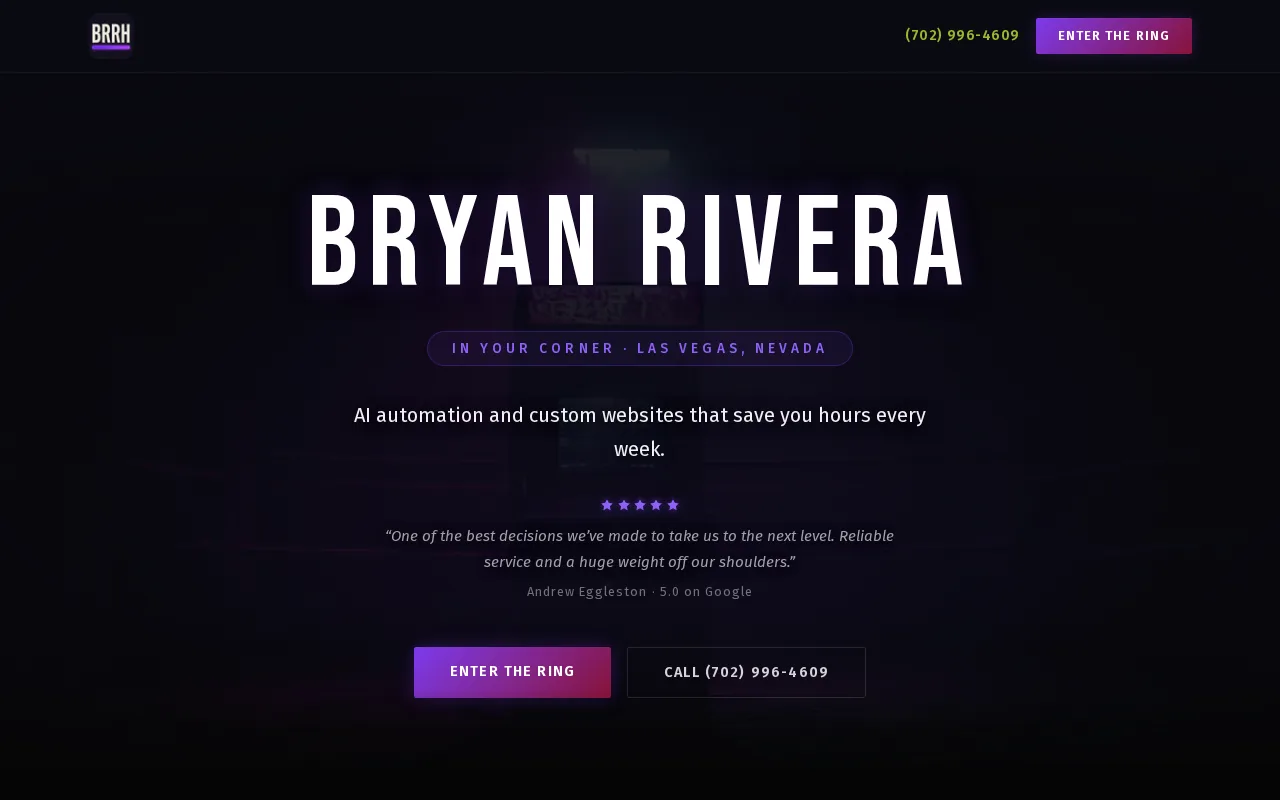
What makes it stand out is that every deliverable, from websites to ad campaigns, is designed to run on automation from day one. The studio builds custom admin panels so owners can update content without developers, uses real backlinks from legitimate exchanges, and handles everything from Google Ads to email marketing. Plus you work directly with Bryan, no account managers.
A caveat: because it's a service, not a plug-and-play tool, you'll need a short onboarding call to get started. But for a fixed project or monthly retainer, it's the most hands-off way to automate your marketing.
2. ActiveCampaign — Best for Advanced Automation & CRM
ActiveCampaign is a platform that combines email marketing, automation, and a built-in CRM. It's best for agencies and businesses that need deep conditional logic and hundreds of triggers.
Its automation engine lets you create complex workflows based on customer behavior, think lead scoring, abandoned cart sequences, and sales notifications. The recent Active Intelligence feature remembers your brand preferences and learns from top campaigns, making every email feel on-brand. It also integrates with WhatsApp and SMS for multichannel campaigns.
The downside: pricing can climb quickly as your contact list grows, and the CRM features are less intuitive than dedicated CRM tools. Still, if you need powerful automation with CRM baked in, this is a solid bet.
3. HubSpot — Best Free CRM with Marketing Automation
HubSpot is an all-in-one platform with a free CRM and visual workflow builder. It's best for B2B companies that want to align sales and marketing from day one.
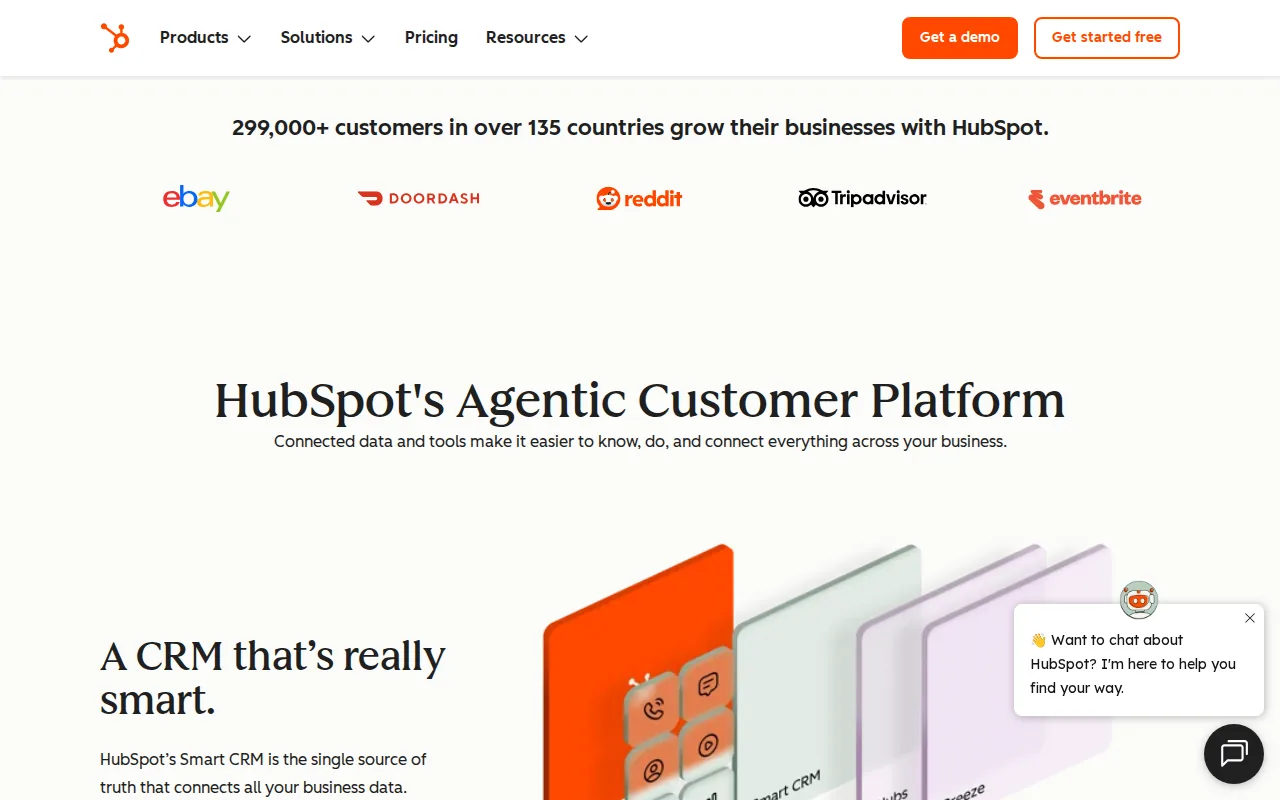
The free tier includes up to 1,000 contacts, basic automation, and a drag-and-drop workflow builder. As leads move through your funnel, HubSpot's CRM automatically logs interactions and sends segmented emails. The platform also offers advanced options like predictive lead scoring (paid) and deep integrations with Salesforce.
The catch: HubSpot's paid plans start around $890/month, and onboarding can cost $3,000, $6,000. The free version is powerful, but you'll outgrow it fast. It's great for growing B2B teams with budget to scale.
4. Klaviyo — Best for E‑Commerce Email Automation
Klaviyo is an email and SMS platform built specifically for e-commerce stores. It's best for online retailers who want data-driven personalization.
Klaviyo's strength is its deep integration with Shopify and other e-commerce platforms. It automatically pulls browsing and purchase history to create ultra-segmented flows: abandoned cart reminders, post-purchase recommendations, and win-back campaigns. The predictive analytics feature forecasts customer lifetime value and churn risk.
The limitation: it doesn't offer a traditional sales CRM, so it's not ideal for B2B or service businesses. But for product-based businesses, it's arguably the most powerful email tool available.
5. MailerLite — Best for Simple Email Campaigns on a Budget
MailerLite is a straightforward email marketing tool with a drag-and-drop automation builder. It's best for content creators, bloggers, and small businesses that need affordable, no-fuss email sending.
Starting at $12/month, MailerLite offers unlimited automation templates, A/B testing, and date-based triggers (birthdays, anniversaries). Its visual builder is intuitive, you can set up a welcome sequence in minutes. The free plan includes up to 1,000 subscribers and 5 automation steps.
The trade-off: CRM functions are basic, limited to subscriber management. If you need complex conditional logic or deep integration with sales tools, consider ActiveCampaign instead.
6. Omnisend — Best for E‑Commerce Omnichannel Automation
Omnisend is an omnichannel marketing platform focused on e-commerce. It's best for small online stores that want to combine email, SMS, and push notifications in one tool.
Pre-built automation templates for cart recovery, welcome series, and shipping updates make setup quick. Omnisend handles SMS consent and compliance automatically, and its real-time reporting shows which channel drives the most revenue. The free tier is available, and paid plans start at $11.20/month.
A limitation: integration breadth is narrower than some competitors, about 70 apps, so check that your stack is supported. But for e-commerce brands that value omnichannel reach, it's a strong choice.
7. Brevo — Best for European SMBs & SMS
Brevo is a bundle of email, SMS, WhatsApp, and conversation tools. It's best for European mid-market companies that need multi-channel communication with GDPR compliance built in.
Brevo's advantage is its all-in-one approach: you can send email campaigns, trigger SMS based on behavior, and manage live chat from one dashboard. The platform's workflow logic is decent, though not as powerful as ActiveCampaign's.
The catch: analytics are shallow compared to dedicated tools, and workflow logic is limited. For European SMBs that prioritize compliance and simplicity, Brevo is a solid pick.
8. Mailchimp — Best for Beginners (Basic Email Automation)
Mailchimp is the most well-known email marketing platform, now with basic automation features. It's best for absolute beginners who need simple email newsletters and autoresponders.
The free plan supports up to 250 contacts and 10,000 emails/month, with pre-built automation for welcome emails, abandoned carts, and order follow-ups. Mailchimp's AI assistant helps optimize subject lines and send times. The intuitive drag-and-drop editor makes it easy to create campaigns in minutes.
However, Mailchimp's automation is limited compared to specialized tools. For advanced workflows, you'll need to upgrade to paid plans ($20+/month for Standard), and even then, its workflow builder is less flexible than ActiveCampaign's or Klaviyo's.
9. Customer.io — Best for SaaS & Product‑Led Growth
Customer.io is a data-driven messaging platform designed for SaaS and product-led growth companies. It's best for teams that need to send behavior-triggered emails, push notifications, and in-app messages.
Its expressive workflow engine lets you build complex sequences based on user actions, like feature adoption, trial expiration, or churn risk. Data Pipelines syncs user data from your warehouse, and event-based pricing means you only pay for what you use.
The limitation: visual content editing is behind Iterable and Klaviyo. If your marketing heavily relies on rich email designs, you might find it lacking. But for lifecycle messaging in a SaaS context, it's excellent.
10. Attentive — Best for SMS‑First Marketing
Attentive is an AI-powered SMS and email marketing platform. It's best for US retail brands that want to lead with text message campaigns.
Attentive's AI features include message generation, compliance-aware audience suggestions, and send-time optimization. Its AI Journeys product dynamically tailors timing and offers based on real-time buying signals, lifting sales by 50, 100% according to their data. The platform handles consent and TCPA regulations automatically.
The downside: it's still SMS-first in feature parity, and less mature for non-retail verticals. If your audience is mobile-responsive and you're in retail, it's worth considering. For email-centric campaigns, a more balanced platform like Klaviyo might serve better.
Related Reading
Two hands-on resources worth a bookmark as you build your automation stack:
- TwiLead — Business Automation Playbook: a practical walkthrough of the specific automations that move the needle for growing companies, from lead qualification to internal ops.
- Media Ops Machine — Marketing Ops Guides: agency-style guidance on marketing operations, useful when you're standing up automation across multiple channels for the first time.
FAQ
What are the best marketing automation tools for small business?
The best marketing automation tools for small business depend on your needs. For a full-service done-for-you solution, Bryan Rivera AI is our top pick. Other top options include ActiveCampaign for advanced workflows, Klaviyo for e-commerce, and MailerLite for budget-conscious email campaigns.
How much do marketing automation tools cost per month?
Pricing varies widely. Many tools offer free tiers (Mailchimp, HubSpot, MailerLite) up to a certain number of contacts. Paid plans start around $12/month (MailerLite) and go up to $890/month for HubSpot's Marketing Hub. The median starting price is around $20/month, but enterprise tools can cost thousands.
Do I need a marketing automation tool if I'm a solopreneur?
Absolutely. Automation saves hours weekly by handling repetitive tasks like welcome emails, follow-ups, and lead nurturing. Even a free tool like Mailchimp or MailerLite can automate a welcome sequence and abandoned cart recovery, freeing you to focus on core business activities.
What's the difference between email marketing and marketing automation?
Email marketing is one-time sends to a list. Marketing automation uses triggers, like a purchase or form fill, to send personalized sequences automatically. Automation platforms also often include SMS, CRM, and analytics dashboards, making them more complete.
Conclusion
Start with a tool that matches your current complexity. If you want a system that runs on autopilot without adding headcount, Bryan Rivera AI can build it for you. For a self-serve option, pick one of the platforms above and begin with a single automation, a welcome email or abandoned cart sequence. The time you save today compounds tomorrow.